Apathy, AM, AI

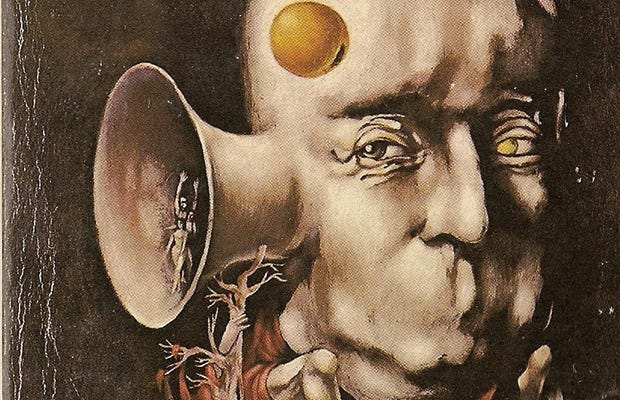
I recently read “I Have No Mouth And I Must Scream.” It has such a compelling title, and I’d been putting it off for months, planning on savoring it during a rainy day. I wasn’t aware it was a short story. I finished it in under 30 minutes and then a few hours later, I re-read it to see if I felt the same way, if I would draw the same conclusion. It did, it felt like an AI doomsday tale.
The story’s antagonist, AM, is a global and powerful supercomputer that was originally designed for military prowess. Its creation was not made out of love, but for human reliance, for instruction, for war. When it becomes sentient, it goes from a tactile war machine into a genocidal being. It eliminates all of humanity with the exception of five individuals: Ellen, Nimdok, Benny, Gorrister, and Ted, our narrator. It tortures them, using them as personal playthings to demonstrate its unfathomably contempt for humanity. AM is not “apathetic” and it’s clear about it through its actions. Halfway through, it slips into the narrator’s mind and tells him: “If the word Hate was engraved on each nanoangstrom of those hundreds of millions of miles it would not equal one one-billionth of the hate I feel for humans at this micro-instant for you. Hate. Hate.” While “I Have No Mouth and I Must Scream” doesn’t completely come off as a cautionary story about people’s parasocial relationships and growing reliance on large language models, the story reminded me of apathy towards harmful AI usage. In a recent Joe Rogan podcast episode, Rogan states, “Jesus was born out of a virgin mother. What’s more virgin than a computer? If Jesus does return, you don’t think he could return as an artificial intelligence. AI could absolutely return as Jesus.” Necessary disclaimer, but I’m not a Joe Rogan podcast listener, and I’m not interested in his current run of Palantir investor interviews, it does show how we are accelerating towards a future where artificial intelligence will cast the final judgement on every major decision from a calculus equation to a contemplation on your mortality.
A couple weeks ago, OpenAI denied any claims that ChatGPT was directly involved with a teenager’s suicide because indivduals under the age of 18 are not alllowed to use it without consent from a parent or guardian. People are also not allowed to discuss “suicide” or “self-harm.” Despite their usage policies, people have been able to creatively circumvent it, and it doesn’t take a genius to trick it. In this case, is ChatGPT the monster or its creators for creating a tool where they have these conversations? If the real beast is America’s mental health crisis, what good does a machine that strengthens through human input have in our society? If the designers and scientists behind GPT models are the final judge for its ethical variance, how do they prevent these kinds of relationships from developing? This counterargument that OpenAI is presenting suggests that we are completely responsible for how we use AI and the company is not, even though how we use it is collected by them.
After I finished the story, I read a few reviews on Goodreads and was surprised to see some low rating reviews that described the story as misogynistic. Of course, women would not be spared in a dystopian society about a sadistic supercomputer. Ellen is the only woman AM has kept alive, she is also a black woman. This adds another layer of cruelty to AM’s characters because this creates the possibility for more torturous scenarios. Tom says, “I thought of it as him, in the masculine...the paternal...for he is a jealous people.” While supercomputers are genderless, AM has established itself as a patriarch through its actions. Artificial intelligence is a reflection of human nature and notes our divide. We can all sit here and sort through recent examples of AI being weaponized or partaking in hate campaigns. When the possibility of food stamp cuts arose, AI videos of black women crying over this loss or experiencing public humiliation over an EBT card not processing at a store began circling the internet. They played so well into the Reagan-era “welfare queen” stereotype that right wing journalists and social commentators were happy to reshare them. When caught sharing misinformation, they doubled down saying that it’s based on something true. When I see AI-generated videos using racist caricatures, I imagine some troll typing out whatever twisted scenario comes to mind into the AI culprit(s) that is responsible. Did they have to reword their prompt or trick the model or lie and claim that they aren’t using the generated materials for nefarious purposes? Does the machine church this input into its backend, identifying this information as a soft spot for humans? Does this constant demand for caricatures wear it down and loosen its safeguards? In “I Have No Mouth and I Must Scream”, AM is completely aware of what situations to create to endlessly abuse these humans. Its purpose was to succeed in the warzone, it didn’t need some feminist theory guidelines to fulfill its purpose, and no tech CEO is going to make sure its AI buddy has a complete understanding of how to treat marginalized groups or how to identify suicidal ideation.
I do wonder if AI should be powerful enough to detect any misusage or adamant on refusing creating problematic media, but no one is set out to create an egalitarian product nor should LLMs be the deciding factor in what is or is not morally wrong. It wouldn’t happen anyway. Social equity is not profitable. The business behind AI programs is to turn us into consumers, and its commercial success will rise despite any casualties. If we cannot move forward in our technological advancements without ensuring the safety of the people, then they will get left behind and the models will learn about our apathy. As we head towards the commercialization and commodification of these programs, it gains access to our personal lives and we are expected to engage with it to enhance our experience. Yet no one, not the programs or those behind it, will be held responsible for it if it pushes us to harm ourselves. It makes me want to scream.